HalalHub.vn · In-depth analysis · 17 November 2026
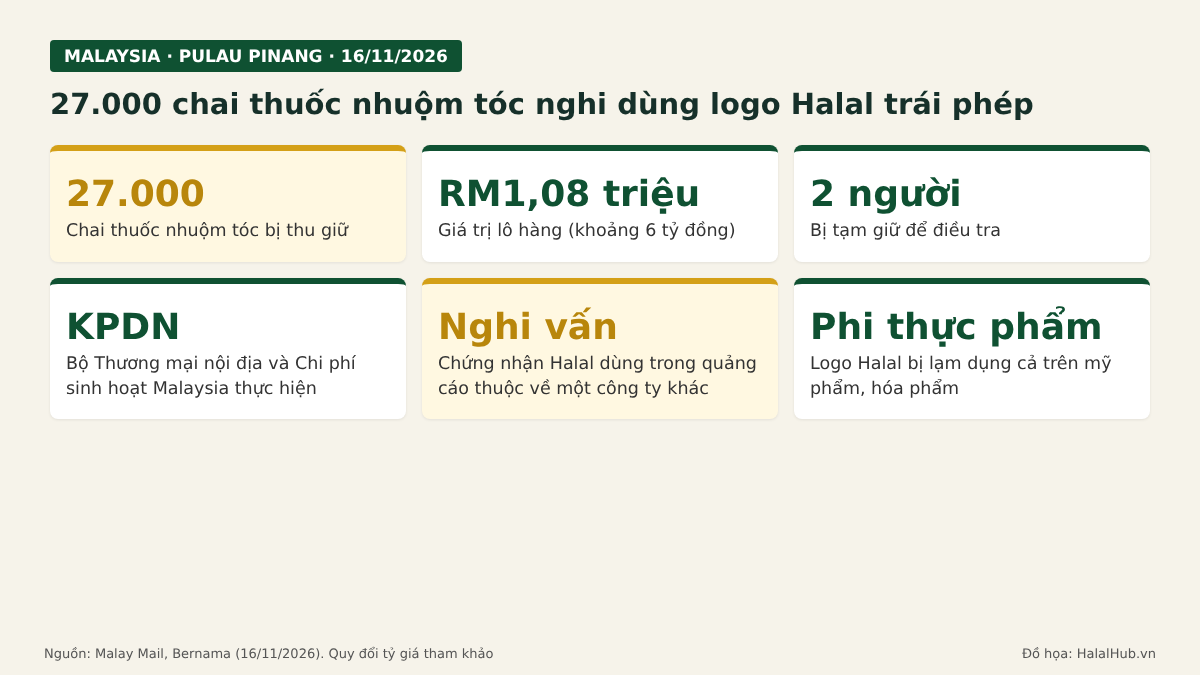
(HalalHub.vn) – On 16 November 2026, authorities in Penang, Malaysia, seized 27,000 hair dye bottles worth RM1.08 million over suspected use of the Malaysia Halal logo without valid certification. The case highlights misuse on non-food goods and increasingly firm enforcement. This article examines common logo errors and how Vietnamese businesses can avoid them.
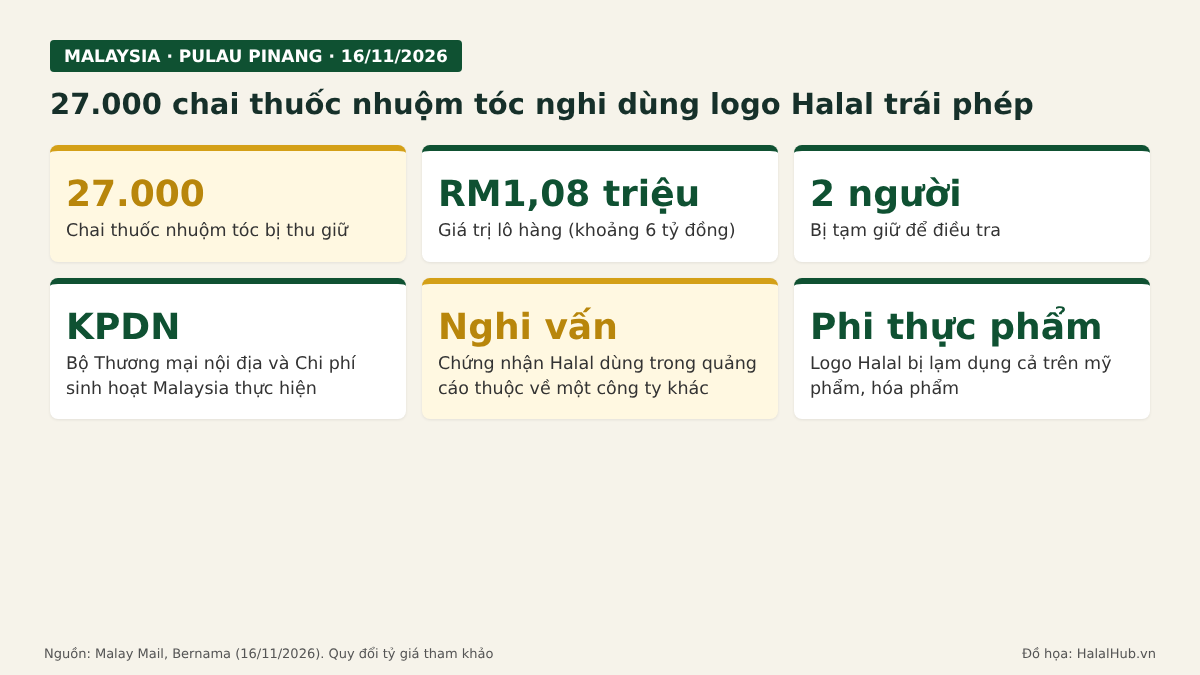
Hair dye seized over suspected unauthorized Halal logo use. Graphic: HalalHub.vn, based on Malay Mail and Bernama.
1. The case
According to Malay Mail and Bernama, Penang’s Domestic Trade and Cost of Living Ministry (KPDN) seized about 27,000 hair dye bottles worth RM1.08 million, approximately VND6 billion, and detained two people. The products allegedly displayed the Malaysia Halal logo without valid certification, while a certificate in advertising materials belonged to another company.
This is not an isolated case. The Halal Times reported that in July 2026 Penang first prosecuted company directors for Halal certification and labeling violations under the Trade Descriptions Act. That month, KPDN Selangor also seized more than 31,000 soap packages from a factory suspected of unauthorized Halal logo use.

Halal logos increasingly appear on haircare and cosmetics, where misuse also occurs. Illustrative photo: Pexels.
2. How Malaysia regulates the Halal logo
| Actor | Role |
| JAKIM and state religious authorities | Issue Halal certificates and manage the Malaysia Halal logo. |
| KPDN | Enforce the Trade Descriptions Act through investigation, seizure and prosecution of false Halal claims. |
| Consumers | Check certification status through the Malaysia Halal Portal. |
Source: HalalHub.vn, compiled from The Halal Times and Bernama.
Halal certification in Malaysia is voluntary, but using the logo requires valid certification. False Halal descriptions are treated as trade-law violations and may lead to seizure and prosecution.
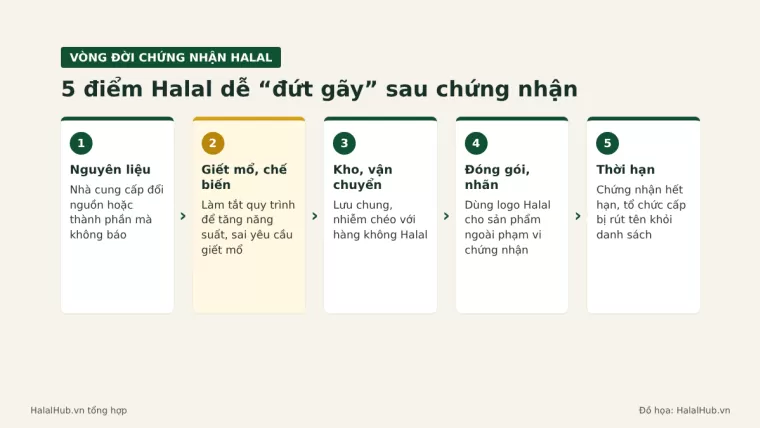
3. Four common forms of misuse
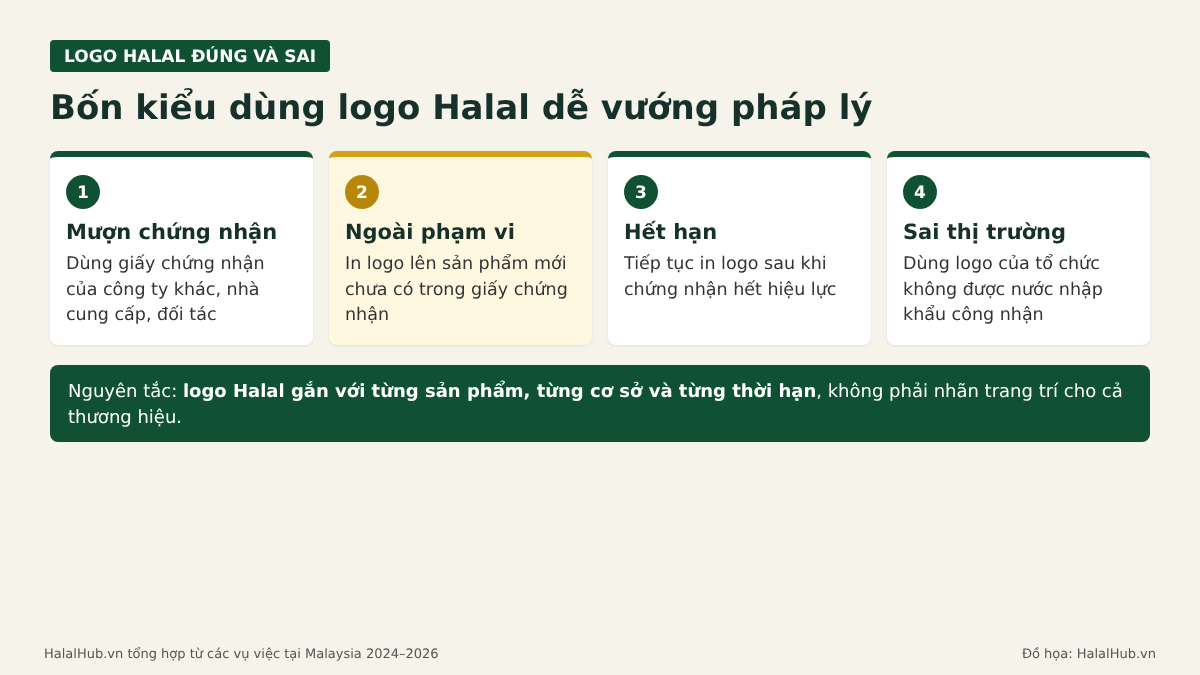
Four Halal logo practices that may create legal risks. Graphic: HalalHub.vn.
Borrowed certificates: using a supplier’s or another company’s certificate to promote one’s own products, as alleged in the hair dye case.
Outside scope: certification covers product A, but the logo also appears on newly launched products B and C.
Expired certification: continuing to print logo-bearing packaging after certification expires; Penang seized snacks and seasonings for this reason in 2024.
Wrong market: using a logo from a body not recognized by the importing country, leading to rejection or a false-description finding.
| ⚠️ NON-FOOD BUSINESSES ALSO NEED CAUTION Cosmetics, chemicals and personal-care products may contain animal-derived ingredients, alcohol or chemicals requiring traceability. Indonesia has placed cosmetics on its mandatory Halal timeline from 17 October 2028. Vietnamese exporters should not print Halal logos without certification covering the correct scope and market. |
4. What Vietnamese businesses should do
1. Maintain an approved list of products entitled to display the logo under the certificate; packaging designers should use only that list.
2. Track expiry dates and plan renewal at least three months ahead; stop printing logo-bearing packaging if renewal is delayed.
3. Do not use ingredient suppliers’ certificates to advertise finished goods; ingredient certification does not replace finished-product certification.
4. Select logos according to destination recognition requirements, including JAKIM, BPJPH, MoIAT and SFDA.
5. Keep certificates, packaging versions and printing dates as evidence for authorities or partners.
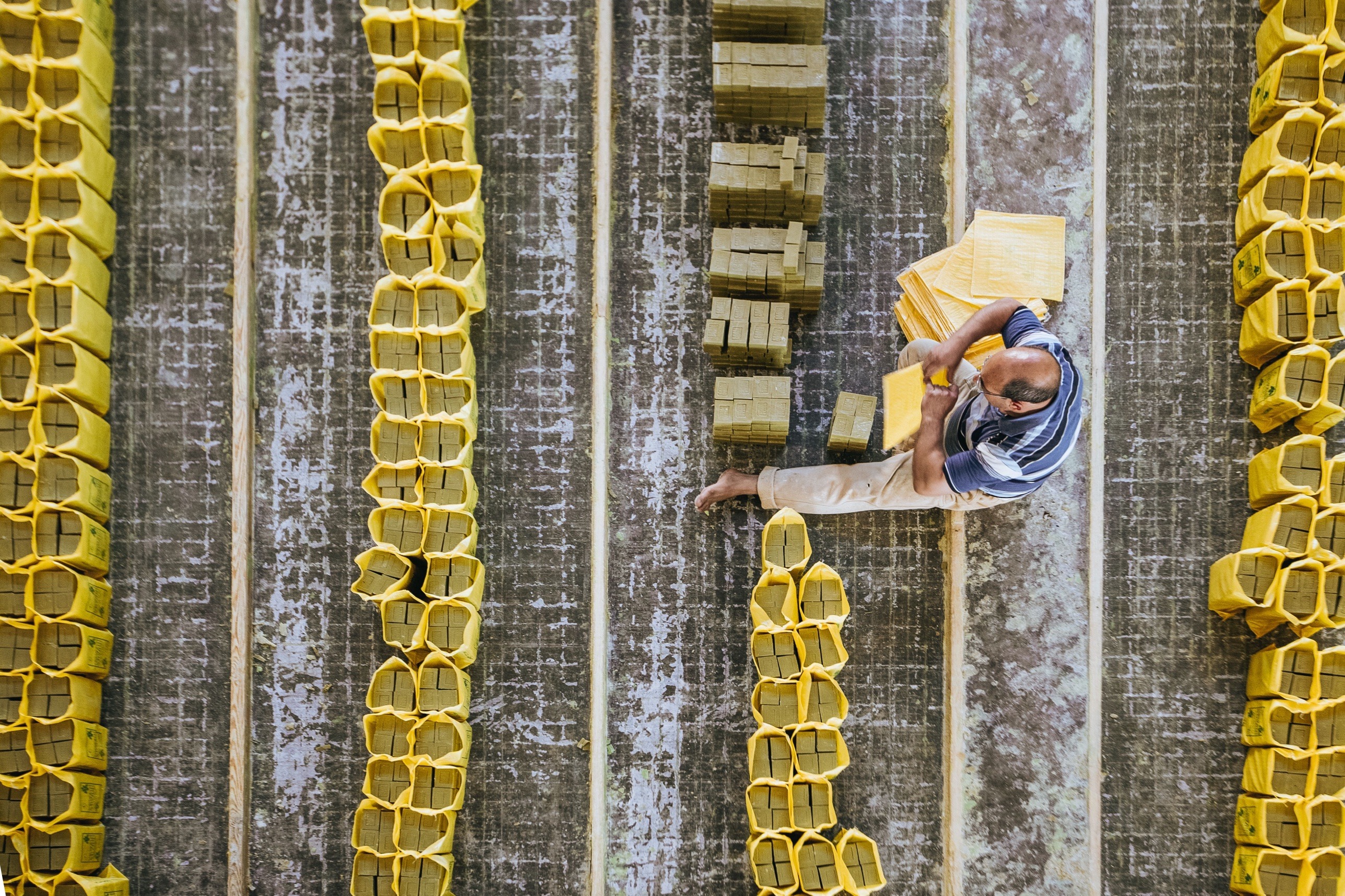
Soap packaging at a production facility. Packaging controls are a straightforward way to prevent Halal logo misuse. Illustrative photo: Pexels.
5. Conclusion
A Halal logo is a legal commitment, not packaging decoration. As importing countries tighten enforcement, a labeling error can lead to seizure of an entire shipment and reputational damage. Controlling product lists, validity and certification scope is a cost-effective way to protect a brand.
Glossary
KPDN: Malaysia’s Ministry of Domestic Trade and Cost of Living.
Malaysia’s Trade Descriptions Act: legislation prohibiting false descriptions of goods, including Halal claims.
Certification scope: the products and facilities specified in a Halal certificate.
Ingredient certification: a supplier’s Halal certification for a component; it does not replace finished-product certification.
References
Official and primary sources
Press and industry analysis (secondary sources, cross-checked by HalalHub.vn where possible)
Bernama – KPDN Seizes 27,000 Hair Dye Bottles Worth RM1.08 Mln Over Suspected Misuse Of Halal Logo
The Halal Times – Penang halal certification prosecutions
The Star (2024) – Snack food company in Penang busted for using expired halal logo
Illustrative photos: Unsplash and Pexels (free licenses). Graphics: HalalHub.vn.
HalalHub.vn · Dated 17 November 2026 · Legal information checked as of 17 November 2026; regulations may change. Businesses should consult original legal texts before implementation.
| ℹ️ ABOUT HALALHUB.VN’S INDEPENDENCE HalalHub.vn is not a Halal certification body and does not issue certificates. Articles provide reference information; HalalHub.vn does not accept payment to name businesses or certification bodies in its articles. |
HalalHub.vn service information
| 🤝 CONNECT WITH HALALHUB.VN Already certified: register and create a business profile in the HalalHub.vn directory, stating the issuing body, certification scope and validity. Not yet certified: follow News and Knowledge for market-specific regulations and timelines. Register at: https://halalhub.vn |