HalalHub.vn · In-depth · 19 November 2026
(HalalHub.vn) – In 2026, Vietnamese food businesses must adapt to two labelling instruments simultaneously: Decree 37/2026/ND-CP on goods labelling (effective 23 January 2026) and Decree 127/2026/ND-CP on Halal products and services (effective 1 June 2026). On 19 November, VCCI called for procedural, labelling and Halal standards bottlenecks to be resolved to reduce business costs. This article examines the two regulatory layers, the proposals, market differences and ways to design packaging without repeated reprinting.
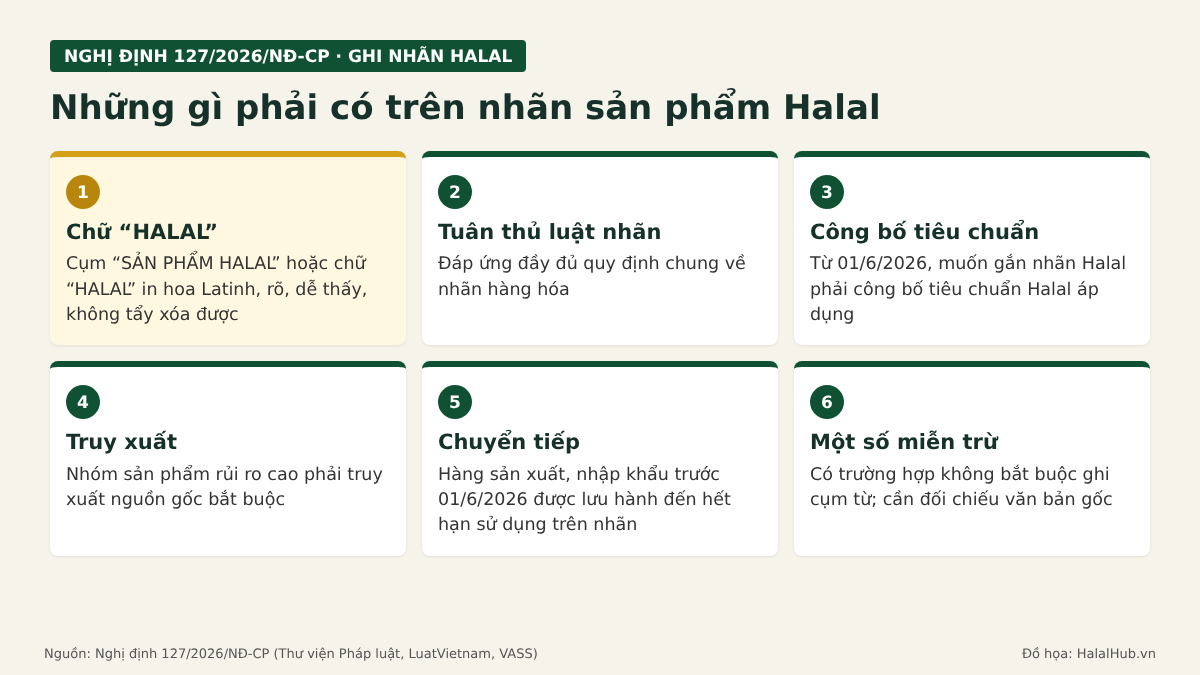
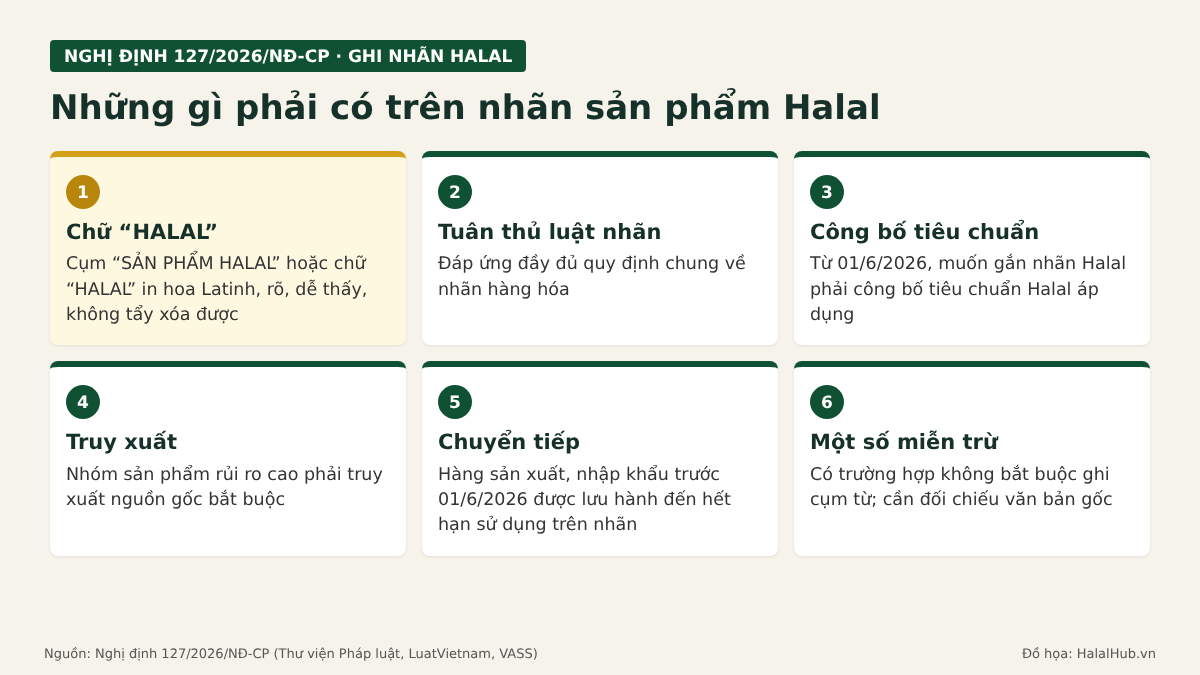
Required Halal product label information under Decree 127/2026/ND-CP. Graphic: HalalHub.vn.
1. Two decrees, one label
Halal product labels in Vietnam are subject to two regulatory layers. The foundation is Decree 37/2026/ND-CP on goods labelling, effective 23 January 2026, replacing Decrees 43/2017 and 111/2021. The additional layer is Decree 127/2026/ND-CP, issued on 6 April 2026 and effective 1 June 2026, specifically governing Halal products and services.
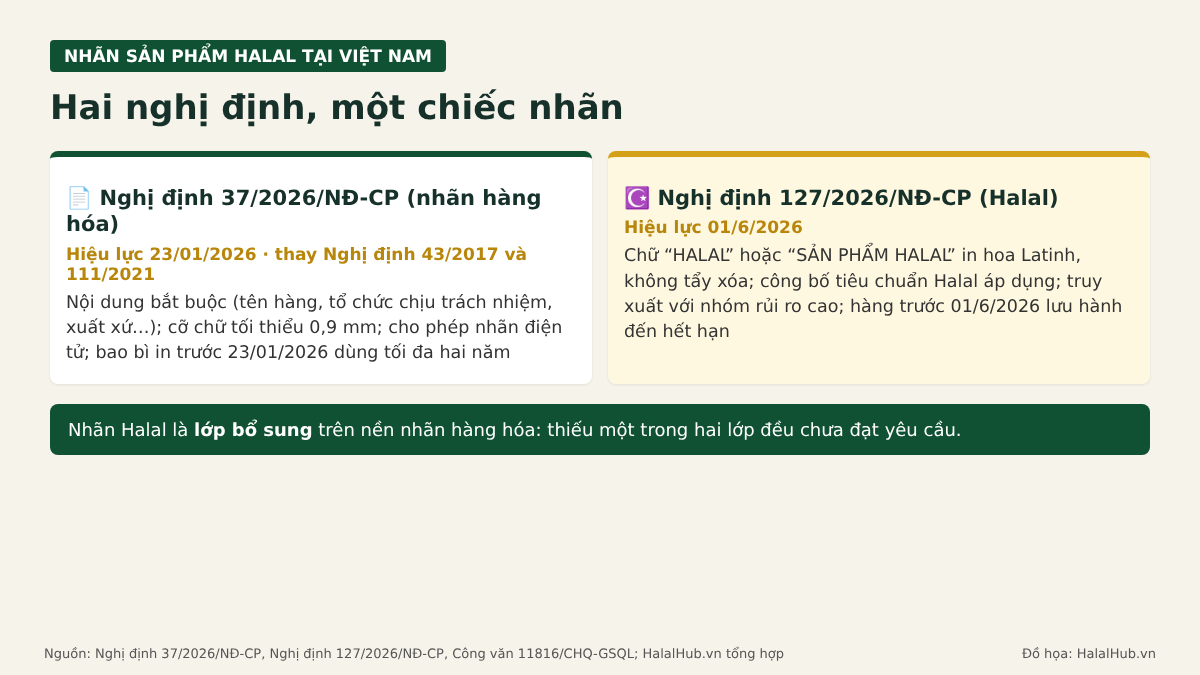
Two regulatory layers apply to Halal product labels. Graphic: HalalHub.vn.
| Item | Decree 37/2026 (goods labelling) | Decree 127/2026 (Halal) |
| Effective date | 23 January 2026 | 1 June 2026 |
| Key requirements | Product name, responsible organization, origin and other mandatory information; minimum character height of 0.9 mm | The phrase “SẢN PHẨM HALAL” or “HALAL” in clear, indelible uppercase Latin lettering; declaration of applicable Halal standards |
| New provisions | Electronic labels permitted, with label change histories retained | Mandatory traceability for high-risk Halal product groups |
| Transition | Goods already in circulation before 23 January 2026 may remain until expiry; packaging printed before that date may be used for up to two years | Goods manufactured or imported before 1 June 2026 may circulate until the expiry date on their labels |
Sources: Decree 37/2026/ND-CP, Decree 127/2026/ND-CP, Official Dispatch 11816/CHQ-GSQL, Thue Hai Quan and LuatVietnam. Businesses should consult the full texts before applying them.
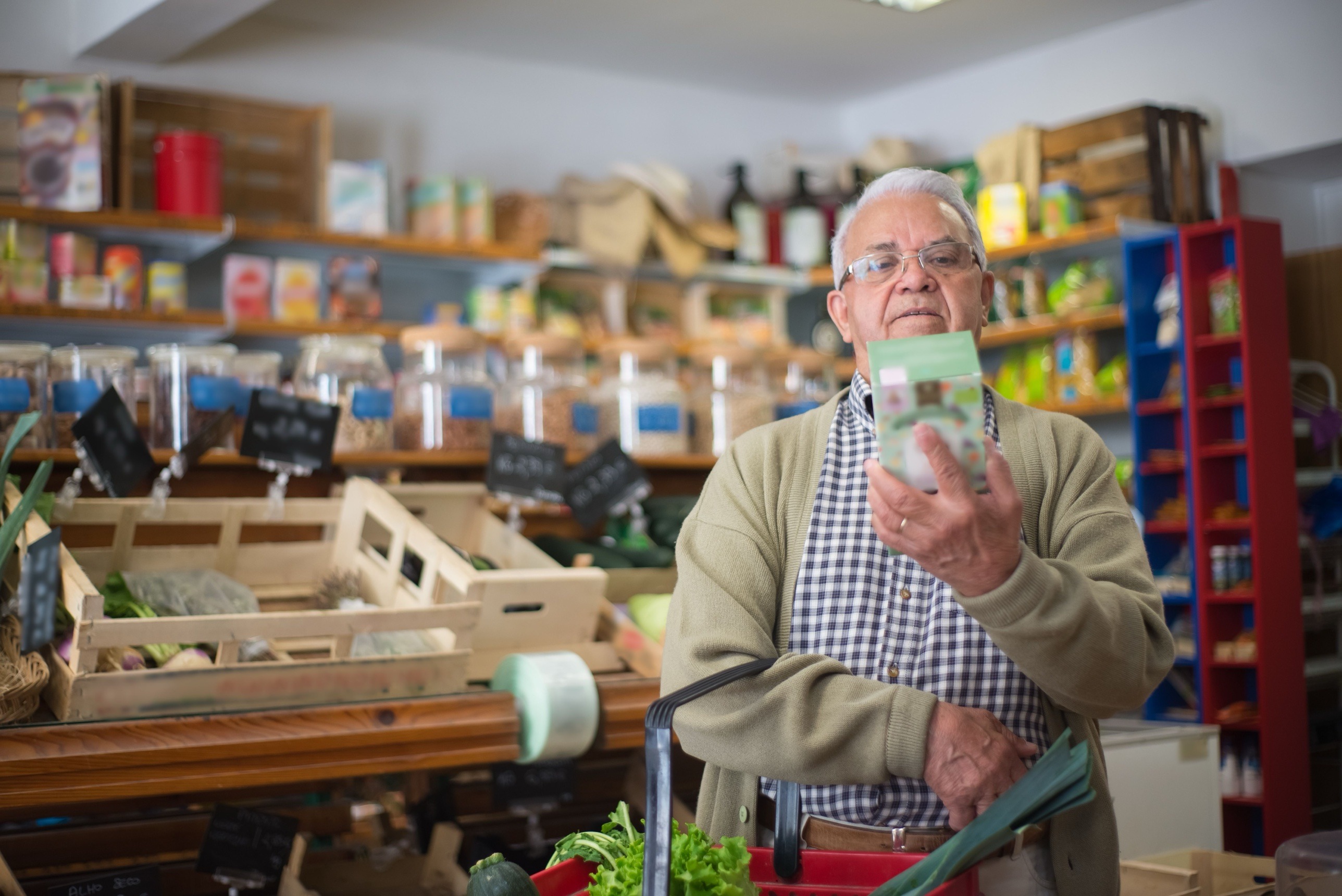
The label is the first place Muslim consumers check when choosing a product. Illustrative photo: Pexels.
2. Dates businesses should remember
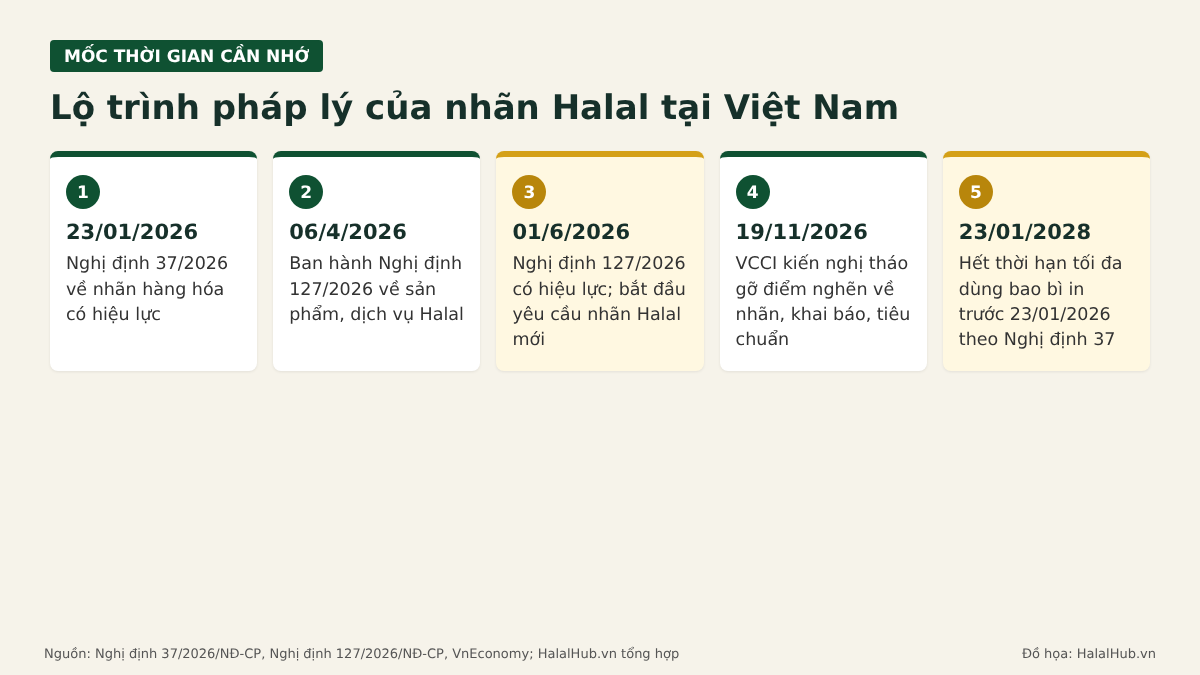
Vietnam’s Halal labelling regulatory timeline. Graphic: HalalHub.vn.
The key date for packaging teams is 23 January 2028, when the maximum two-year period for using packaging printed before Decree 37/2026 took effect expires. For Halal labelling, products manufactured from 1 June 2026 must meet Decree 127/2026 requirements. Businesses should plan to use up old packaging and switch to new labels before these dates.
3. VCCI identifies three bottlenecks
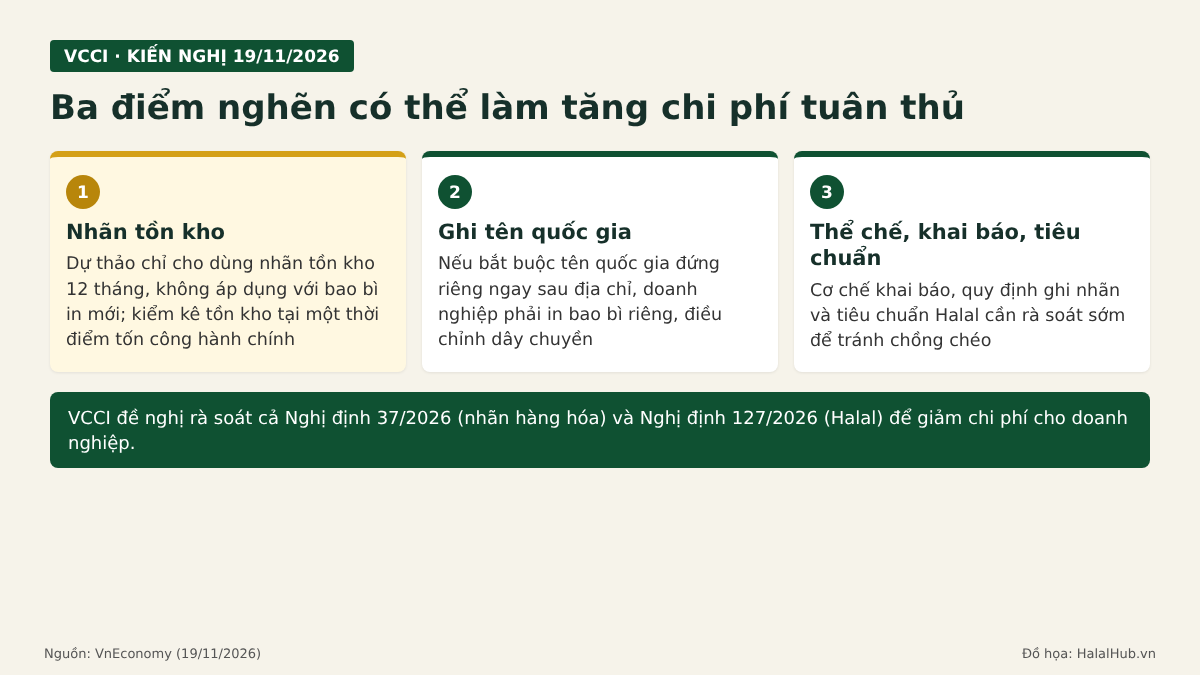
Three bottlenecks VCCI wants resolved. Graphic: HalalHub.vn, based on VnEconomy.
According to VnEconomy, VCCI believes institutional issues, declaration mechanisms, labelling rules and Halal standards may increase compliance costs, and recommends reviewing Decrees 37/2026 and 127/2026 together:
Label inventories: one draft permits existing label stocks to be used for only 12 months and excludes newly printed packaging; detailed stocktaking at a fixed date creates substantial administrative work.
Country names: requiring a country name to appear separately immediately after the address would require businesses to invest in production lines and print separate packaging.
Institutions, declarations and standards: these require review to prevent overlap between legal instruments.
| 🔎 NOTE ON DOCUMENT STATUS Some VCCI comments concern draft implementing documents. The draft’s “12 months” differs from Decree 37/2026’s “up to two years” for packaging printed before 23 January 2026. HalalHub.vn has not confirmed the final version of the implementing document. Businesses should monitor official documents and consult regulators before printing large packaging runs. |
HalalHub.vn analysis: the first two bottlenecks both concern packaging reprinting costs. For SMEs, a label redesign can entail new printing plates, disposal of packaging stocks and production interruptions. Stable, clear implementing rules are therefore as important as the rules themselves.
4. One package, multiple markets
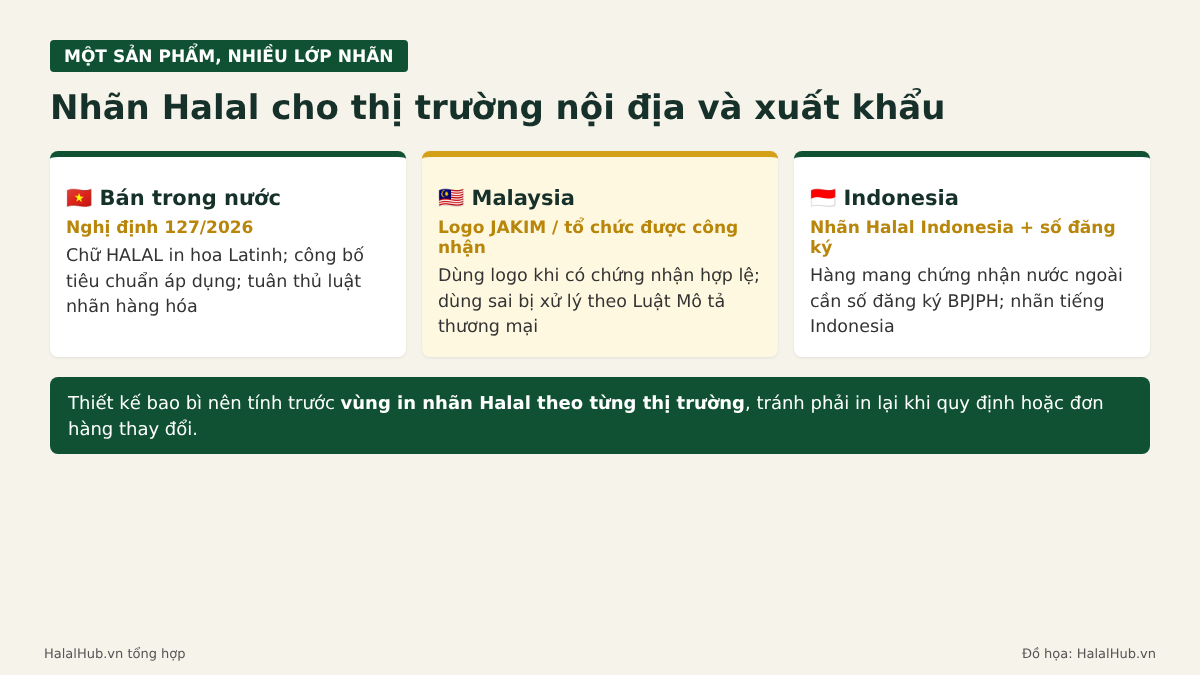
Halal labelling requirements differ by market. Graphic: HalalHub.vn.
| Market | Halal labelling requirements | Risks of non-compliance |
| Vietnam | HALAL wording under Decree 127/2026; label content under Decree 37/2026; declaration of applicable Halal standards | Enforcement under labelling and Halal product regulations |
| Malaysia | Halal logo from JAKIM or a JAKIM-recognized body, only with valid certification covering the correct scope | Enforcement under the Trade Descriptions Act; possible seizure of goods |
| Indonesia | Indonesian Halal label; foreign-certified goods require a BPJPH registration number; Indonesian-language labels | Goods cannot circulate; mandatory deadline for imported food: 18 October 2028 |
Sources: HalalHub.vn compilation from Decrees 127/2026 and 37/2026, JAKIM, BPJPH and Bernama.
The seizure of 27,000 hair-dye bottles in Malaysia on 16 November 2026 for using another company’s Halal certification is a reminder that a Halal logo on packaging is a legal commitment in the destination market, as well as a design element.
| 💡 GETTING THE DESIGN RIGHT THE FIRST TIME Reserve space for Halal labelling and use modular designs so content can change by market. Use supplementary labels for country-specific information where permitted instead of printing many packaging versions. Use electronic labels and QR codes (electronic labels are permitted by Decree 37/2026) for detailed certification information that can be updated without reprinting. Keep print runs moderate while implementing rules continue to evolve, avoiding large packaging inventories. |
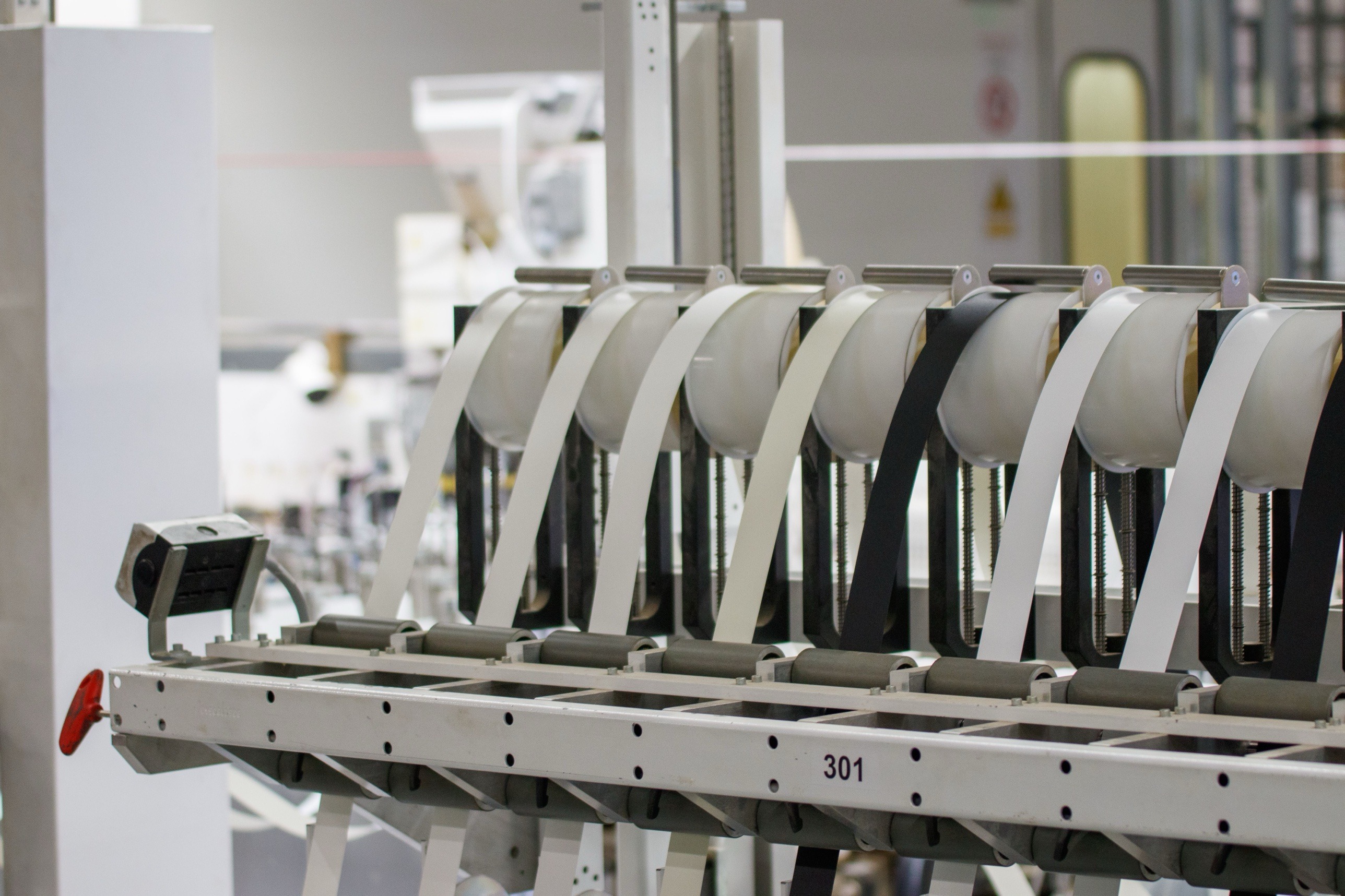
Modular packaging design helps reduce reprinting costs when regulations or markets change. Illustrative photo: Pexels.
5. A checklist for label design teams
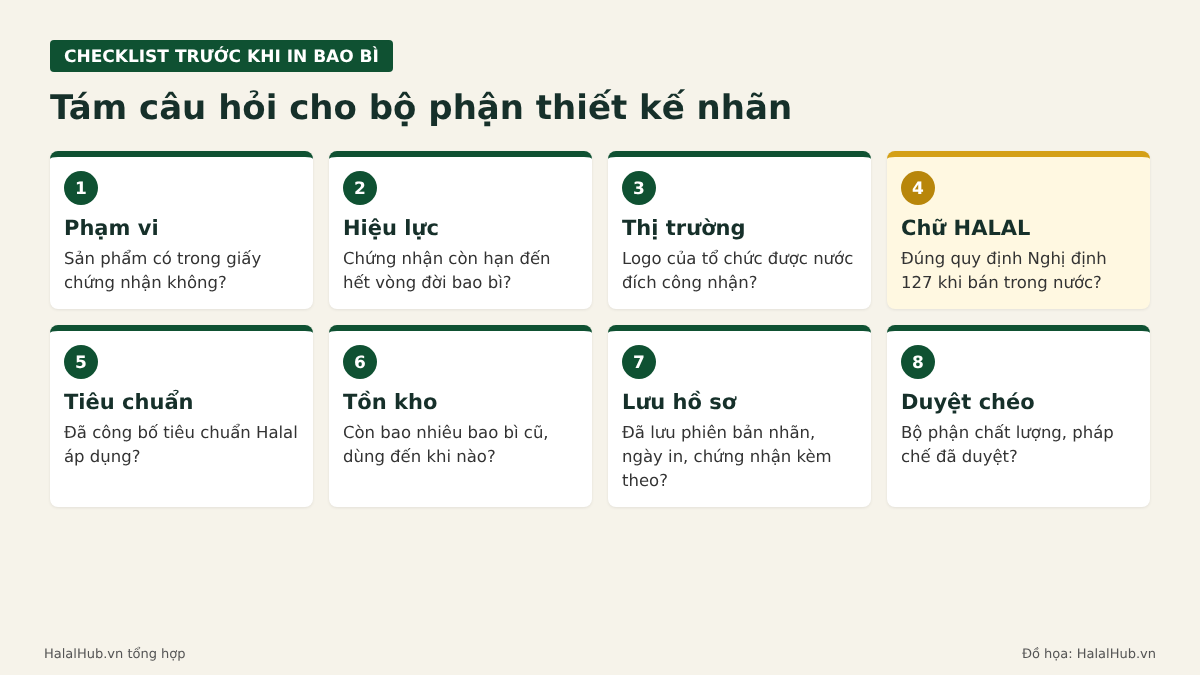
Eight questions to answer before printing Halal product packaging. Graphic: HalalHub.vn.
| Question | Check | Responsible team |
| Scope | Is the product covered by the Halal certificate? | Quality |
| Validity | Will certification remain valid throughout the packaging batch’s lifecycle? | Quality |
| Market | Does the logo belong to a body recognized by the destination country? | Export, quality |
| HALAL wording | Does it comply with Decree 127/2026 for domestic sales? | Legal |
| Goods label | Does it contain all mandatory information and meet Decree 37/2026 character-size requirements? | Legal, design |
| Standards | Have applicable Halal standards been declared? | Legal, quality |
| Inventory | How much old packaging remains, and until when may it be used? | Warehouse, purchasing |
| Records | Have the label version, printing date and supporting certification been retained? | Design, quality |
Source: HalalHub.vn recommendations.
6. Conclusion
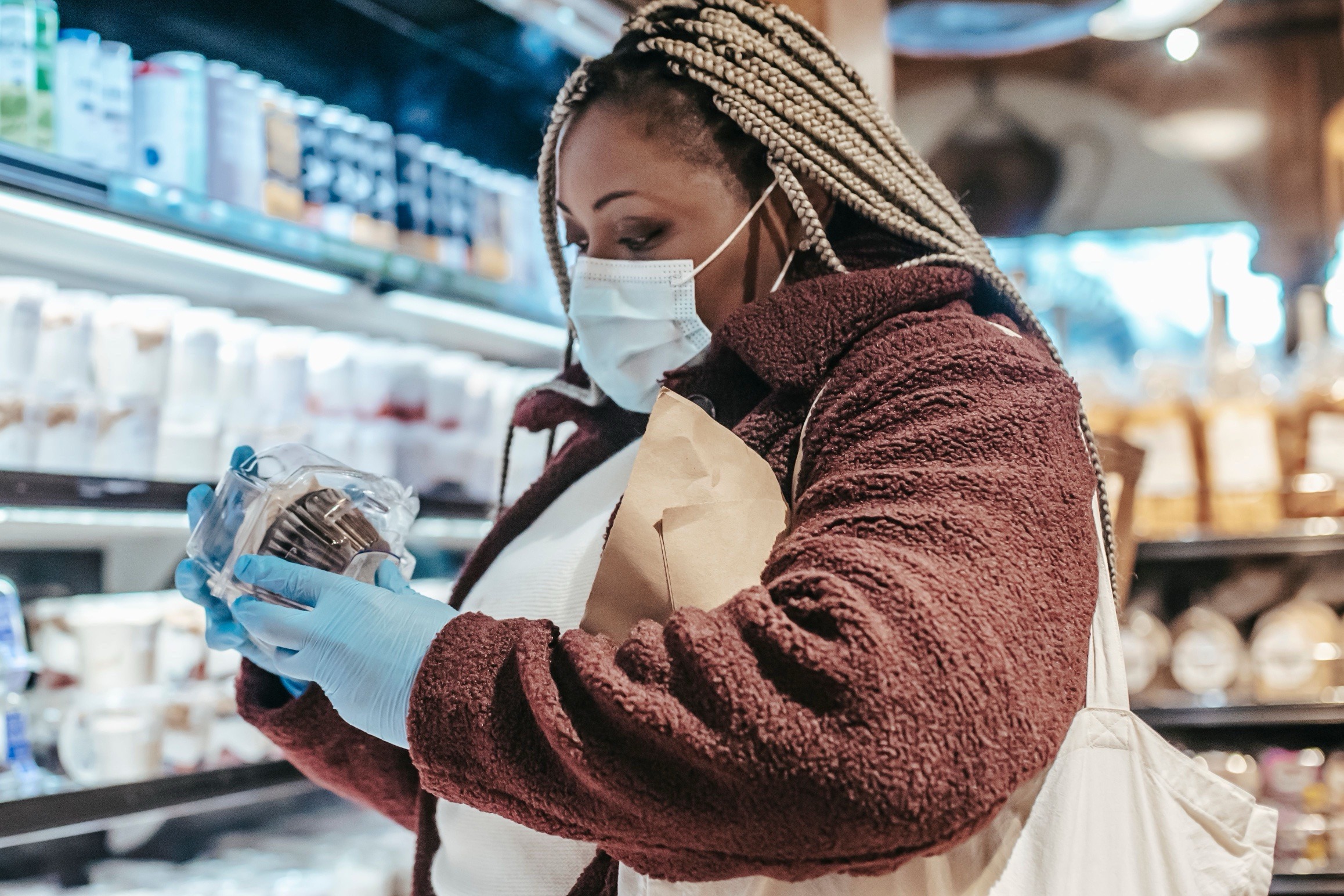
Clear, compliant labels help Muslim consumers choose with confidence. Illustrative photo: Pexels.
Halal labels bring together legal requirements, certification and trade. In 2026, businesses must comply with new goods labelling rules under Decree 37 while adding the Halal layer under Decree 127. VCCI’s recommendations show that implementing rules still need refinement to avoid imposing greater costs on businesses. Meanwhile, modular packaging design, electronic labels, sensible print runs and close control of certification scope and validity can substantially reduce risks and costs.
Glossary
Decree 37/2026/ND-CP: the goods labelling decree, effective 23 January 2026, replacing Decrees 43/2017 and 111/2021.
Decree 127/2026/ND-CP: the decree on quality management and development policies for Halal products and services, effective 1 June 2026.
Electronic label: a label displayed electronically, such as a QR code linking to product information.
Declaration of applicable Halal standards: a business’s declaration of the Halal standards met by its products or services.
Supplementary label: an additional label providing mandatory information absent from the original label.
VCCI: Vietnam Chamber of Commerce and Industry.
References
Official documents and sources
Media and specialist analysis (secondary sources, cross-checked by HalalHub.vn where possible)
VnEconomy – Resolving bottlenecks in the Halal decree to reduce business costs
Thue Hai Quan – Notes on goods labelling under Decree 37/2026/ND-CP
EY Vietnam – Updated labelling requirements under Decree 37/2026/ND-CP
Vietnam Academy of Social Sciences – Introduction to Decree 127/2026/ND-CP
Bernama – KPDN Seizes 27,000 Hair Dye Bottles Over Suspected Misuse Of Halal Logo
Illustrative photos: Pexels (free licence). Graphics: HalalHub.vn.
HalalHub.vn · Published 19 November 2026 · Legal information checked through 19 November 2026; regulations may change. Businesses should consult original documents before applying them.
| ℹ️ ABOUT HALALHUB.VN’S INDEPENDENCE HalalHub.vn is not a Halal certification body and does not issue certificates. Articles provide reference information; HalalHub.vn does not accept payment to name businesses or certification bodies in its articles. |
HalalHub.vn service information
| 🤝 CONNECT WITH HALALHUB.VN Already certified: register and create a business profile in the HalalHub.vn directory, stating the issuing body, certification scope and validity. Not yet certified: follow News and Knowledge for market-specific regulations and timelines. Register at: https://halalhub.vn |